(Last Updated On: )
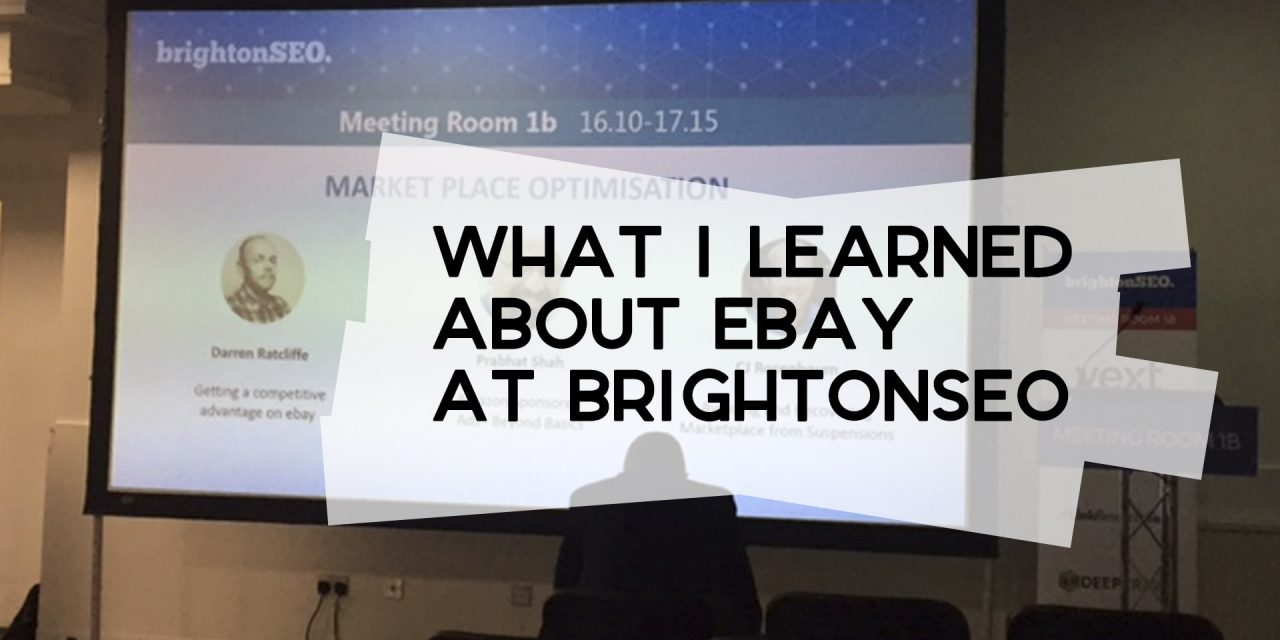
Last week was the busy one where I had overnight stays in four cities and a big town called Milton Keynes. One of the cities I spent time in was Brighton, home to the aptly titled BrightonSEO, a digital marketing conference with search engine optimisation at its heart. As I mentioned before, I’ve been a few times and I’ve learned a lot about a bag of different things. However, I didn’t expect to be able to attend a dedicated talk on eBay.
I would consider myself to be a competent eBay user. Both as a buyer and seller, I’ve been around. However, I’ve only learned through experience. Unlike Amazon, where I feel like you have to do plenty of reading before you do anything, eBay’s a lot more intuitive for first-timers. Once you’ve bought a few things, sold a few things, done a few returns, responded to some mad questions, you pretty much get the understanding.
However, I’m definitely on the casual seller end, even if I’m on the site every day. eBay sellers overlook all kinds of things that may put them at a disadvantage. Remember that eBay’s search engine is powerful and it’s in your favour to learn how it works.
Here are a few things I learned from Daniel Ratcliff’s talk:
1. 60% of transactions start or End on Mobile
The ecommerce mobile trend is being felt across all ends of the industry. Amazon, eBay and Argos are obviously at the forefront of ecommerce in the UK. Each of them has made significant leaps in the past couple of years to enhance their mobile experience, because the tipping point happened. More people are visiting and apparently shopping from their mobile on eBay.
What does that mean for you? Optimise for it. eBay rinsed out the old school description templates recently for this every reason, and they’re making other adaptions to make sure the on-the-go experience is as seamless as the desktop one. Make titles and descriptions punchy. Highlight important things. Use large images.
2. The ‘Other’ Categories are No-Go
This one sounds obvious, but it’s easy to ignore. If you ever attempt to list a product and think the ‘Other’ category options should be used, you’re slipping. They’re essentially a graveyard for the products that eBay demotes in their search results, because they’re unlikely to be the thing that a buyer’s looking for.
Rather than picking an ‘Other’ category, go for anything that’s similar. It’s always the safer option. eBay has too many sub-categories on its site for your product to qualify as ‘Other’. Look harder, and you will find a place for it. Always check if you clicked ‘Sell One Like This’ if it’s been assigned with the correct categorisation.
3. Brands should be listed as per eBay’s Guidelines
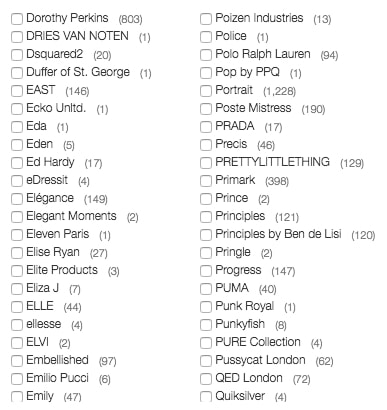
Brands like consistency. They like it when everyone respects their name, and the way they like to present it. eBay is the perfect example. They may have rebranded recently, but it’s hard to shake the capital B in the name. The logo may have changed, but all other marketing material appears to refer to them as ‘eBay’, rather than ‘ebay’.
Lots of other brands have quirks like that. Some like capitalisation. Some like dashes in their name. Everyone knows the best way they like to be named. eBay doesn’t though. They have all brands listed in a particular way. eg. Ecko Unltd, (not Ecko Unlimited), Marks and Spencer (not M&S), Dsquared2 (not D Squared 2). It makes it significantly easier if you list according to their standard.
4. EANs are a Must
EANs (European Article Numbers) are unique product numbers assigned to barcoded products. It’s helpful when an ecommerce site uses these, as it makes it easier for others to identify who has the same stock, and for consumers to compare prices.
If you know the EAN, add it, because it shows that you’re willing to help eBay present more complete product listings. The more information you add to yours, the more likely it is that someone will stumble upon it, either from a search or from category filtering.
5. Promoted Listings are for Everyone
Promoted listings sound scary to many sellers, because they spend enough in monthly eBay fees, and they don’t want even more. However, if you have a lot of stock in a slow-selling product, a little push can trigger sales and give it more visibility.
I learned from Amazon that it’s perfectly fine for non-private label sellers to dabble with a little paid search. It can get the ball rolling when it’s otherwise quiet, so perhaps should be used more often. If you decide to, make sure you keep your eye on that ad spend.

- NVIDIA’s AI Dominance: Evaluating DataCentre Demand, Competitive Risks, andValuation Sustainability - July 1, 2026
- Controlling Power From Anywhere in the World - September 16, 2025
- From Flat Sheet to Strong Box: How Smart Design Stops Damage - August 28, 2025