
(Last Updated On: )
What’s This About?
Everyone knows that Q4 is when retail pops. Christmas is coming, and the people want to spend that cash on presents and their damn selves. Toys, DVDs, video games, and lots of other giftable products suddenly become more sought after around this time. Lots of resellers prepare themselves for this, for obvious reasons.
In summer there might not be the same mad dash because of a set date (like Christmas Day and Black Friday), but thousands of other otherwise near-dormant products suddenly start selling in mass quantities. Sun cream, bikinis, sunglasses, and various other items start doing numbers. Again, you’re aware of this.
If you know about those – and don’t have to think about them – consider just how many other products go through the same meteoric rise at specific times of the year. It’s very helpful to know about as many of these as possible. Once you know how people search, you can make educated guesses about good times to hunt for deals and good times to list your products. Whether you sell on eBay, Amazon, Facebook or wherever else, it all still applies.
What is Google Trends?
Google is great for many reasons. The reason were concentrating on today is the vast amount of data the provide for absolutely free. Yes, we might have beef with them for breaking AdSense for non-paying users last year, but we still have to give them props for other tools in their arsenal.
Google Trends tracks search data around the world, documenting any peaks and troughs in people looking for particular products on Google. They use a 1-100 scale of relative searches from one time point to another, giving you an indication of when the most and fewest people search for something.
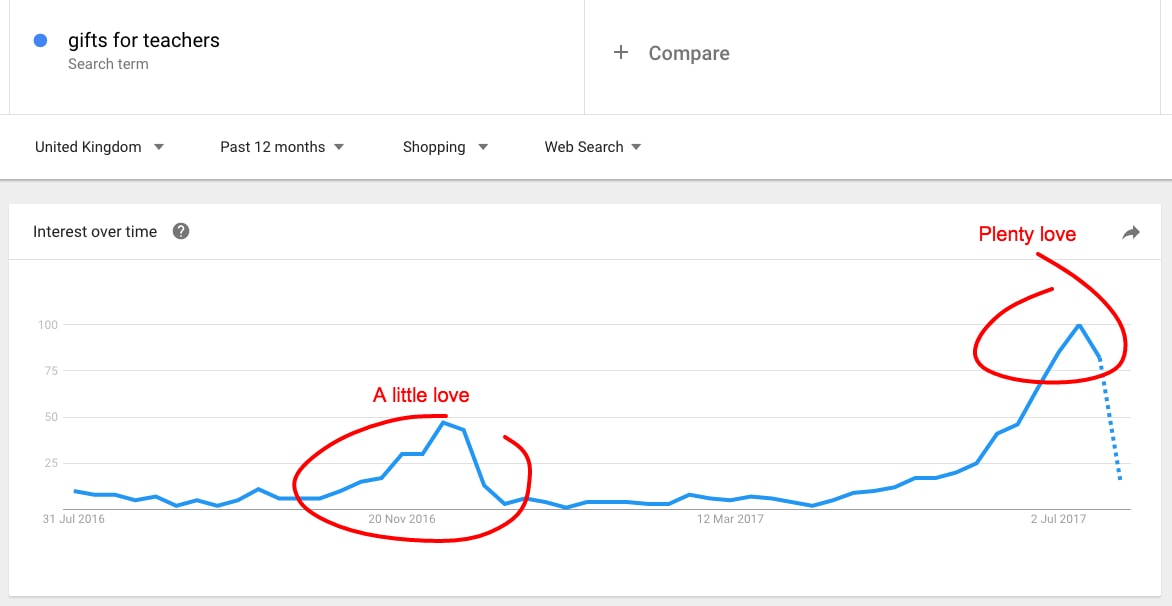
As the top search engine in the UK (and America and everywhere else readers of this blog are likely to be from) by some margin, you can bet that any search trends from Google's data is a true reflection of the rest of the country. For instance, if Google searches say that lots people search for [gifts for teachers] in July and a fraction of them do in December, it probably means teachers can expect a lot less for Christmas than they can at the end of a full school term.
Understand?
How Do You Find Sales Rushes with Google Trends?
As mentioned previously Q4 is a great time for retailers. The ones that sell in relevant product categories gear themselves up for this period. Christmas turns people into spending fiends, accelerating the rate of searches, as people are on the hunt for those things. They use previous sales data and search data to inform how much they should stock up on, and you should do the same.
Assuming you’re expanding your inventory and are planning to sell in more product categories, you may not have any historic sales data to look at. Also assuming you don’t have an AdWords account you’re spending money on, your best bet is to head over to Google Trends and search every product, and see what it says.
An obvious example is perfume. It’s an easy purchase. Women like perfume. If you're looking for a quick win over Q4, buy a popular perfume in Q3 at a discounted rate, hold out until October, and watch it fly off the shelves.
Want validation for that you're making the right choice? Just head over to Google Trends, and see for yourself.
Follow these instructions:
- Navigate to Google Trends
- Change the country to the UK
- Change the timescale to a full year
- Filter to the Shopping category
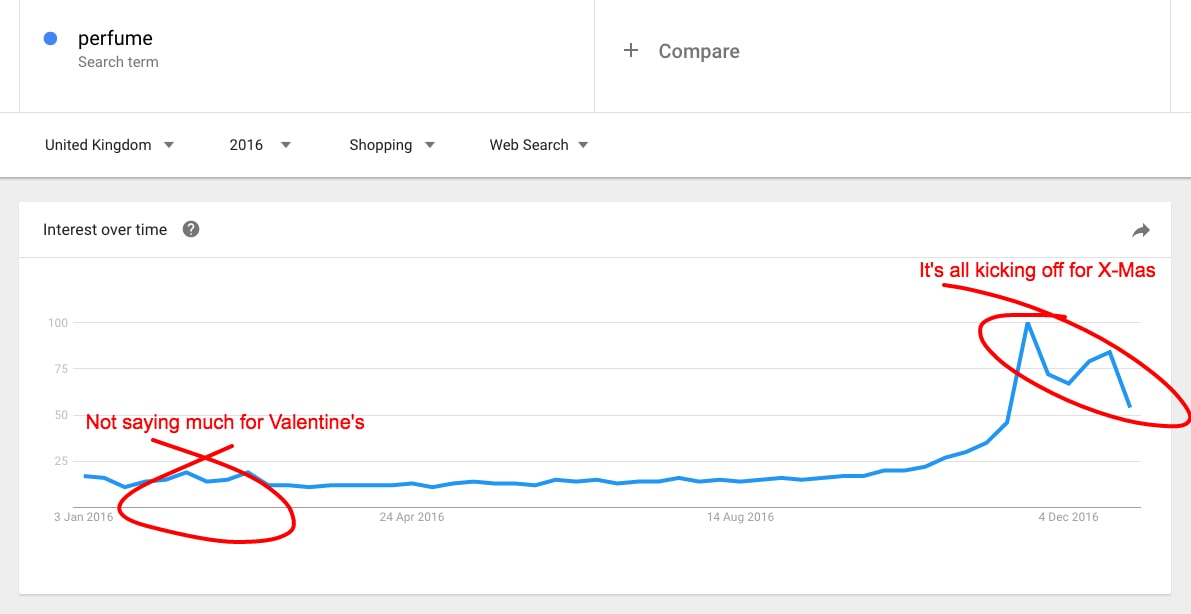
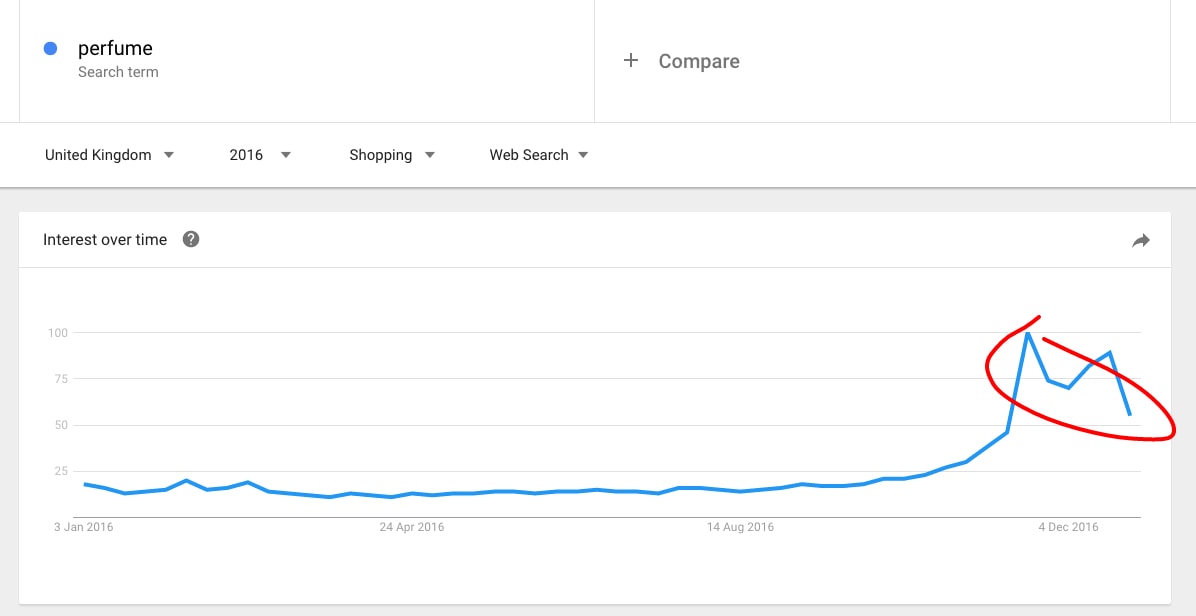
People want Google to tell them which perfume to buy. From March to September, barely anyone is looking for it. Christmas lurks and the masses appear.
With this example, it's clear that Christmas plays a big part in perfume sales. Despite what we may expect, Valentine's Day surprisingly isn't anywhere near as influential in driving those searches.
Another term that follows a similar trend is [candles]. Although the weather will play a part in the matter too, Christmas (and Black Friday especially) cause people to start searching.
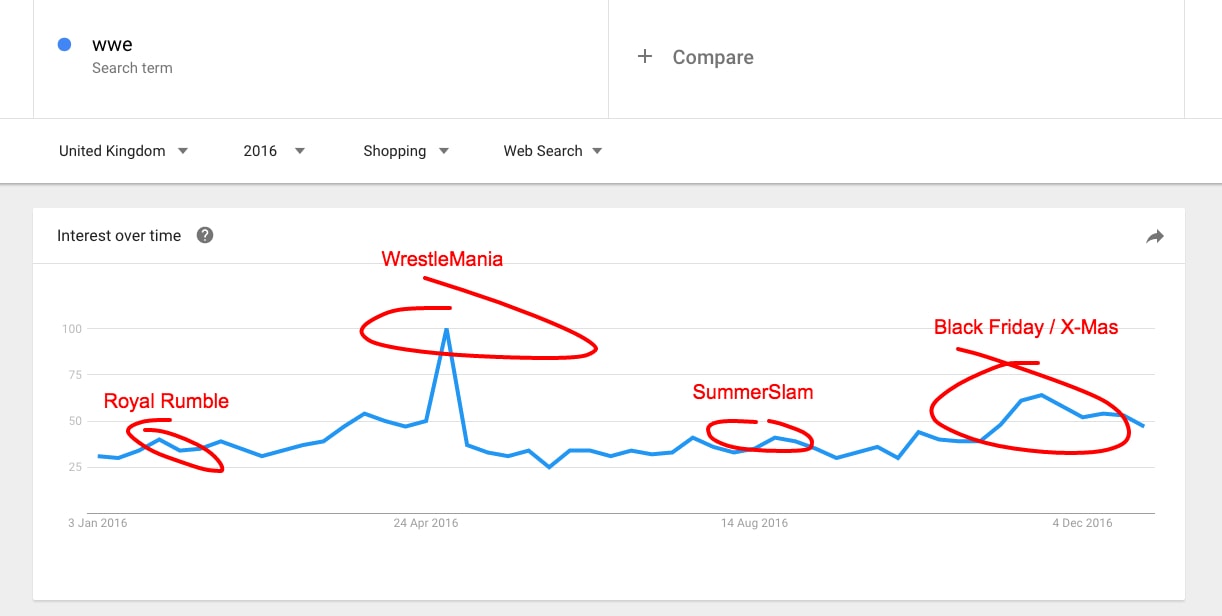
As a life-long wrestling fan, I could tell you without looking when people suddenly take an interest in WWE again. Those that used to be into wrestling when they were younger have trouble resisting when the Royal Rumble takes place in late January, and when WrestleMania hits in late March or early April.
Heading over to Google Trends, I can see that it translates into product searches at predictable times of the year: straight after WrestleMania, a couple of weeks after the Rumble, and at Black Friday – when parents of new WWE fans have to pay for it by stocking up on figures, masks, rings, t-shirts and WWE Network subscriptions.
Don’t Forget to Look Over the Long Term
In some cases, you might want to see whether a product is growing or declining in popularity over time. Trending kitchen electricals are a great example. Coffee machines, spiralisers, mixers, and those kinds of things. All you would do is plot the timescale for longer period, such as four years, to see whether those peaks are increasing each Christmas, or going down.
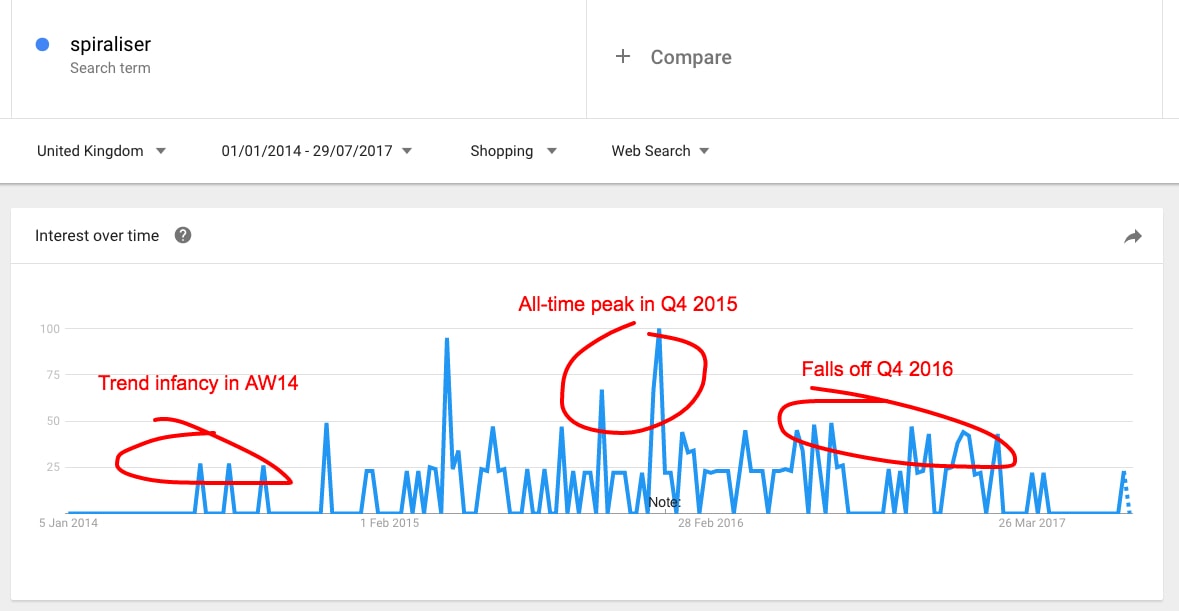
After all, what was popular last year or even the last five years might not be popular next year.
Do your research before you make your bulk buys. If it's not a category you have experience in, this is a great starting place to establish search patterns. If you're unsure of whether to go for one product type over another, you can also use the compare feature to see how significant a difference the search volume is. It's likely the sales quantity will follow the same trend.

Now it's Your Turn
Everyone has access to all of this information and it's completely free. If your sales aren't affected by some sort of seasonal influence, I'd be surprised. Checking in on Google Trends can ensure you're at least clued up on when the dry and fruitful points are likely to some.
Explore it for yourself, and you'll soon see how the seasonal trends play out. Some are based around what the Sun's doing – [sandals] obviously perks up when people have holidays on their minds. Others might be based on TV – like how Great British Bake Off and [baking] are closely linked. This being the case, you might want to stock up on bakeware by early August. There are so many things like this, and you just need to put in the work to find them.
Google Trends is perfect to let you reduce your assumptions and make more informed buying decisions when you're sourcing. Don't trust it, just verify it by checking the Sales Rank on Amazon on Keepa.

- NVIDIA’s AI Dominance: Evaluating DataCentre Demand, Competitive Risks, andValuation Sustainability - July 1, 2026
- Controlling Power From Anywhere in the World - September 16, 2025
- From Flat Sheet to Strong Box: How Smart Design Stops Damage - August 28, 2025