(Last Updated On: )

What is an Amazon to Amazon Flips?
Amazon to Amazon flips are online arbitrage opportunities where you buy a product on Amazon and sell the same thing back on Amazon for profit. Unlike eBay, where each seller has a unique product listing, Amazon sellers share listings. If someone has decided to underprice their item, a savvy seller could buy it, and list it themselves for a higher, profit-rearing price.
This kind of arbitrage is at the fun end of the business. This is what dead prez were on about when they encouraged us to pimp the system.
Why Do Sellers Underprice on Amazon?
Several factors influence the abundance of Amazon to Amazon flips. Here's a quick rundown of the main reasons sellers underprice their goods on the same site you can profit off:
They're New
When you're new to Amazon, you just want a taste of those sales. That being the case it's common to see these new sellers listing with an aim to achieve a low ROI. They don't mind how much it is, so long as they made money in the process. Profit is profit to them. This is unsustainable, as a few refunds could put them in a sticky situation.
They Forgot to Reprice
When restocking an item, you may not be aware that the market value has increased since the last time you had it. It's an easy mistake to make – often the other way around when the price actually tanks – and both angles can be costly to encounter.
Someone consistent kept returning to a Mr Bean-related listing at £7.50 when all the other sellers had it in the £20-£25 range. They left money on the table and opened themselves up to others (like me) to buy their products and relist it at the higher price.
They Were Merchant Fulfilling
The Buy Box favours Amazon-fulfilled products. They trust that the transaction will be smooth, because there are no third parties involved between them and their customers. Amazon is the one handling the goods at every step of the process, so they trust that they are more likely to deliver on their promise than a third-party.
Even when the merchant fulfilled price is significantly lower than the FBA one, it may not earn them the Buy Box. It sucks to be them, but that's just how it is. This means you can go ahead and swoop up their stock at the low price (with enough room for a healthy profit) and list it at a higher one.
They Wanted to Liquidate Their Stock
Maybe they bought too many and need to get rid. Maybe they just want their money back on some items a bit quicker. Maybe they want out of the Amazon game altogether.
People drop prices for all kinds of reasons, and it leaves things wide open for the more experienced sellers to take advantage of the opportunity and resell their goods for a better price.
Their Items are Seasonal
Seasonal items are stressful when they don't sell. Imagine buying a load of Christmas products and not seeing them shift by the time you get to 20th/21st/22nd December. Drastic times and all that. It might be because someone beat them on price, then overlooked something in your sourcing, or they just bought a dead item.
You're better than that. You're just like me; the kind of person that buys a product in the middle of Q4, while everyone is freaking out.
To date (updated in late 2020), I'm most proud of a 2016 Amazon to Amazon flip. In December 2016 I bought a merchant fulfilled hammock for £25 (plus £4.97 shipping).
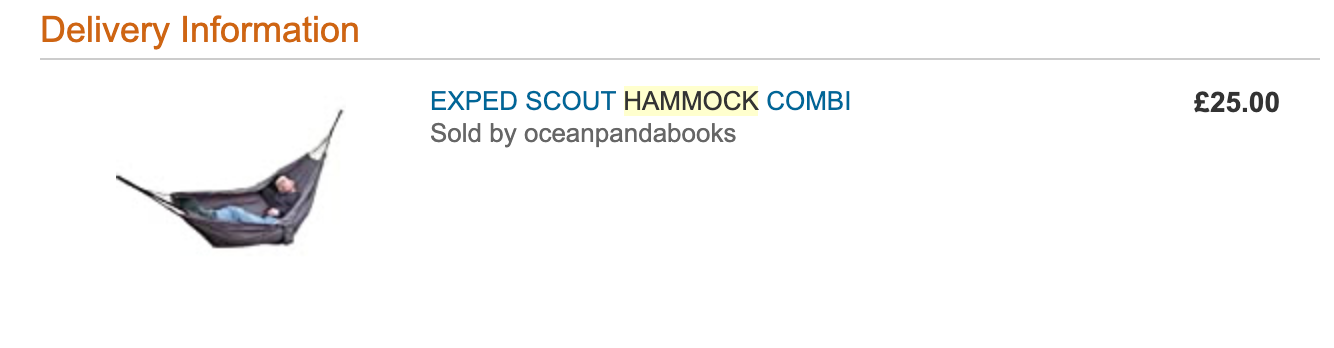
I nearly forgot to send it into Amazon the next summer. It wasn't until the following July that I did. Just two weeks after it hit my inventory, it sold for £149.99.

The same thought process can be applied to buy Christmas items in late December/early January, to sell back when they're ripe the following year.
They Didn't Time Things Right
This is especially true for FBA sellers. Fees might have caught up to them. Other sellers might have replenished their stock and held the Buy Box. They might not have been patient enough. This and many other reasons come into play. Timing is everything in this game. Stock up too soon or with too much competition, and you're asking for trouble.
If you're lucky enough to be the only person in stock, you have full control over the price of the product. Some sellers don't take advantage and leave things listed at a ‘normal' retail price, when they might be able to double it. If they're not going to do it, buy the unit off them and do it for them.
How Do You Find Amazon to Amazon Flips?
The easiest way is to use software. My favourite is Tactical Arbitrage, which scans the site for opportunities like this. Navigate to a category or search results page, and its Amazon Flips functionality will scan to see where there have been some significant price drops, or other reasons you may want to consider buying something from Amazon to sell back on there.

The manual way can be just as fruitful. That hammock example was found accidentally. I went to a camping website to see what high value items were on sale. A hammock was reduced by £200. When I checked on Amazon, one was a fraction of that sale price. What started off as a window shop for arbitrage inspiration ended up bringing a massively profitable flip.
Another method (that Amazon probably aren't happy) with involves seeking out duplicate listings. The less popular ones may be cheaper than the one that sells frequently. It gives you another way to get involved in the action.
Once you have a varied inventory, you may find that sellers undercut you at a price you can afford to source at. Once you take their low priced product off the market, shoppers have no choice but to go for your higher value listing.
What are the Rules About Buying on Amazon to Sell On Amazon?
Same Buying and Selling Account
If you are the seller of a product, you are not able to buy it from the same account (with the same email address). If you attempt to, Amazon will stop you in your tracks.
Prime
Amazon sellers are prohibited from using a Prime membership to purchase products that they will then sell on Amazon. Again, if you have the same email for Buying as you do selling, Amazon is against this activity.
How Do You Get Around Restrictions?
You don't want problems with Amazon. Once they suspect dodgy activity on your account, they're quick to act and suspend your account. Once you want to set yourself free (if at all), they tend to take their time. It's best to stay on their good side. However, that doesn't make Amazon to Amazon flips impossible.
All you need is a separate account for Amazon purchases. Set it up on a different email, preferably using a different bank card. If possible, a different address would also come in handy. That should cover you from all issues.
For more tips like this, check all the lessons I've learned from Amazon FBA online arbitrage.

- NVIDIA’s AI Dominance: Evaluating DataCentre Demand, Competitive Risks, andValuation Sustainability - July 1, 2026
- Controlling Power From Anywhere in the World - September 16, 2025
- From Flat Sheet to Strong Box: How Smart Design Stops Damage - August 28, 2025